
Can Massachusetts build enough homes to improve affordability, and should the state have more authority over local housing development?

That was one of the biggest questions on my mind when I had the opportunity to interview Massachusetts Governor Maura Healey.
I’m Katherine, the face behind Moving to Boston, and as a real estate professional working throughout Boston, Newton, and Greater Boston, I see firsthand how limited housing inventory affects buyers.
Our conversation touched on new construction, zoning restrictions, starter homes, and the state’s efforts to accelerate development. It also sparked debate about how Massachusetts should approach its housing shortage.
But beyond the different opinions, there’s a bigger question worth exploring: What do these housing policies actually mean for people trying to buy a home in Greater Boston?
Why I Asked Governor Healey About Massachusetts Housing Inventory
When I spoke with Governor Healey, I wanted to understand what Massachusetts is doing to make it easier to build more homes.
It’s a conversation that matters whether you’re buying your first condo in Boston, looking for a single-family home in Newton, or comparing communities like Brookline, Needham, and Wellesley.
The reality is that housing availability is a significant challenge across Massachusetts.
According to the state’s comprehensive housing plan, A Home for Everyone, Massachusetts needs approximately 222,000 additional homes between 2025 and 2035 to address existing shortages and anticipated demand.
More than 121,000 of those homes are needed in the 101 municipalities covered by the Metropolitan Area Planning Council, which serves Greater Boston.
That means a substantial share of the state’s projected housing needs is concentrated in the region where many of my clients are looking to buy.
During the interview, I asked Governor Healey about her goals for increasing inventory across Massachusetts.
Then I brought the conversation closer to home.
I asked about the suburbs, smaller residential lots, and the opportunities I see for housing development in Newton.
That’s where the discussion moved beyond broad housing goals and into the local zoning decisions that could shape Greater Boston’s future.
Governor Healey’s Claim About 100,000 Homes: What Does the Data Actually Show?
One of the first statements Governor Healey made was:
“I’ve built 100,000 homes. 100,000 homes are in the pipeline right now because of the things that I’ve done.”
That’s a significant claim, especially when Massachusetts is dealing with limited housing availability and high home prices.
But there’s an important distinction between homes that are proposed, approved, under construction, and completed.
According to the Massachusetts Executive Office of Housing and Livable Communities, approximately 90,400 homes had reached various development milestones between January 2023 and August 2025.
Those milestones included proposed developments, funding commitments, permits, and completed homes.
They did not represent 90,400 completed properties.
The state’s more recent housing production data offers another perspective.
Massachusetts reported 34,561 net new residential addresses added during 2025, approximately 15.6% of its 222,000-home target.
That’s meaningful progress, although the state acknowledges that address-count data does not always correspond precisely to when each property became ready for occupancy.
These figures document substantial housing activity, but they do not independently verify that 100,000 homes had been completed.
And here’s why that distinction matters to buyers.
A housing project that has been proposed or approved may eventually create additional inventory. But until construction is completed and properties become available, it doesn’t necessarily change your options in today’s Boston real estate market.
The question I think we should keep asking is not just how many homes are being planned, but how many homes are actually reaching the market, where they’re being built, and what buyers can realistically afford.
Why I Brought Up Starter Homes and Smaller Lots in Newton

One of the topics I was particularly interested in discussing was the possibility of building homes on smaller lots.
When I asked Governor Healey about increasing inventory in the suburbs, she responded:
“I support the valid question around starter homes because we need to allow for building on smaller lot sizes.”
This is something I’ve discussed with my audience before, and I believe it’s an important part of the housing conversation.
In communities like Newton, minimum lot-size requirements and other zoning regulations can influence the types of homes that are permitted.
When zoning requires larger residential lots, it can limit opportunities to create smaller homes or divide certain parcels for additional housing.
For buyers, that can affect the range of available properties.
Think about someone who wants to buy in Newton but doesn’t necessarily need a large house on a substantial parcel of land.
Could smaller-lot development create more options?
Potentially.
But there’s another side to this discussion.
Some residents are concerned about whether additional development could place pressure on roads, utilities, stormwater systems, or existing neighborhood infrastructure.
Others question whether newly built starter homes would actually be affordable once land costs, construction expenses, and market demand are factored into the price.
Those are reasonable questions.
Allowing smaller homes is not the same thing as guaranteeing affordable homes.
However, zoning determines what can legally be built. If certain housing types aren’t permitted in the first place, they cannot contribute to the available inventory.
My takeaway is that we need to be willing to examine whether existing zoning rules are creating unnecessary obstacles while still considering the practical needs of each community.
Should Massachusetts Override Local Zoning? The Debate Over ADUs
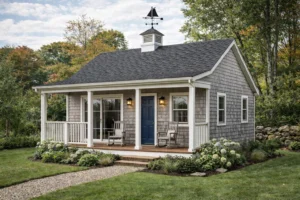
Another major part of our conversation focused on accessory dwelling units, commonly called ADUs.
Governor Healey told me:
“On the state level, one thing that we did is we overrode local zoning on something called ADUs.”
She explained that the state had taken action because local zoning restrictions can prevent communities from adding housing.
This is one of the clearest examples of the disagreement between statewide housing priorities and local control.
Under the Massachusetts Affordable Homes Act, qualifying ADUs became permitted by right in applicable single-family zoning districts on February 2, 2025.
An ADU is a separate living space on the same lot as an existing home. Depending on the property, it might be a basement apartment, garage conversion, addition, or detached unit.
Under the statewide law, eligible homeowners generally do not need discretionary zoning approval to create one qualifying ADU, although building permits and applicable regulations still apply.
The legislation does not apply to Boston in the same way because the city operates under a different zoning framework.
You can review the details through the state’s official Accessory Dwelling Unit guidance.
Why are people divided over ADU zoning reform?
Supporters see ADUs as a practical way to create more housing within existing residential areas.
For homeowners, an ADU may offer opportunities for additional living space or rental income, depending on the property and applicable requirements.
Critics and skeptics raise questions about whether statewide rules give municipalities enough control over local development decisions.
And even when an ADU is legally permitted, construction costs can be a substantial obstacle.
The state has acknowledged in its analysis of remaining ADU development barriers that some building inspectors reported potential construction costs reaching $500,000.
That’s an important reality check.
Changing zoning laws can remove legal barriers, but it doesn’t automatically solve financing, labor, material, or construction challenges.
For Newton homeowners considering an ADU, the legislation may create opportunities worth exploring. But property-specific research and financial analysis are essential before moving forward.
Can Massachusetts Really Reduce Housing Permitting to 30 Days?
During the interview, Governor Healey also addressed the time required to move housing projects through the approval process.
She said:
“It used to take like over a year to get through a process, now it’s 30 days.”
That caught my attention because development timelines are an important factor in housing production.
The state’s official policy announcement helps clarify what that statement means.
On January 16, 2026, the Healey administration announced reforms to the Massachusetts Environmental Policy Act (MEPA) review process, which took effect January 30, 2026.
The changes introduced a streamlined environmental review pathway for qualifying housing developments.
According to the administration, eligible projects can complete this review in approximately 30 days, compared with timelines that previously could extend a year or longer.
You can read the announcement here:
Governor Healey Files Environmental Review Reforms to Accelerate Housing Permitting and Development.
But there’s a distinction worth emphasizing.
This does not mean every housing development in Massachusetts can receive all its required permits in 30 days.
Projects may still require local approvals, building permits, infrastructure reviews, and compliance with other regulations.
The administration argues that reducing certain approval delays can lower development costs and make new housing projects more feasible.
That’s a reasonable objective, particularly when lengthy timelines can increase financing and carrying costs.
At the same time, environmental protections, infrastructure planning, and meaningful community participation remain important considerations.
The broader challenge is creating an approval process that is efficient without overlooking the responsibilities that come with development.
Why the Housing Conversation Is So Divisive
What I find interesting about the discussion surrounding this interview is that people can agree Massachusetts needs more housing while disagreeing strongly about how to get there.
Some see Governor Healey’s proposals as necessary steps toward increasing supply and creating more opportunities for buyers.
Others worry about reducing local control and the consequences of adding housing without sufficient infrastructure planning.
I think the disagreement comes down to three questions.
Who should decide what gets built?
Should individual cities and towns make those decisions independently, or should Massachusetts establish statewide housing rules when local restrictions limit development?
Will additional housing actually improve affordability?
Economically, increasing supply can help ease housing shortages over time. But that doesn’t guarantee immediate price reductions or make every newly constructed home affordable.
In fact, the state’s own Housing Needs Assessment acknowledges that more supply may slow price growth without necessarily reducing housing costs.
How do we balance development with community needs?
Housing construction can create new opportunities, but infrastructure capacity, environmental requirements, transportation access, and local planning must also be considered.
I don’t think these questions have to turn into an argument about being for or against development.
The more useful conversation is about which policies can produce additional housing, what trade-offs they involve, and how their results should be measured.
That was the purpose behind the questions I asked Governor Healey.
The Role of Ballot Questions and Local Authority
Beyond legislative actions and executive policy, the debate over housing in Massachusetts has also played out directly at the ballot box. Discussions around ballot measures—such as Question 7—highlight how deeply engaged voters are when local control and statewide housing mandates intersect. For buyers navigating the Greater Boston market, this serves as a reminder that housing reform is an ongoing negotiation. While state leaders push to accelerate development, local communities continue to weigh the balance between regional growth and neighborhood autonomy.
What This Means for Buyers Moving to Boston, Newton, and Greater Boston
If you’re considering buying a home in Boston or relocating to one of its surrounding communities, these policy changes are worth understanding.
Not because they guarantee lower prices, but because they could influence the types of properties available in the future.
Here’s what I would pay attention to:
- Housing inventory: Faster approvals and zoning changes may eventually create more housing choices, but projects still take time to complete.
- Starter homes: Changes to minimum lot sizes could make certain types of smaller homes possible where they previously weren’t allowed.
- ADU potential: If you’re buying a property in Newton or another covered municipality, understanding whether an ADU is feasible could be part of your long-term planning.
- New construction: Development regulations and construction costs can influence where builders choose to invest and what types of homes they deliver.
- Local zoning decisions: Newton, Brookline, Needham, Wellesley, and other communities have different development patterns and local regulations that are important to evaluate individually.
My advice is not to assume that statewide housing reforms will immediately change home prices in a particular neighborhood.
Instead, look at the actual inventory, recent comparable sales, property characteristics, and current market conditions in the communities you’re considering.
Those factors remain essential when making a home-buying decision.
Frequently Asked Questions About Massachusetts Housing Reform
What was the main topic of Katherine’s interview with Governor Healey?
I asked Governor Maura Healey about increasing Massachusetts housing inventory, making it easier to build starter homes in the suburbs, reducing permitting delays, and changing zoning regulations that restrict development.
Did Governor Healey build 100,000 homes?
Governor Healey made a claim about 100,000 homes during our conversation. Official state data shows approximately 90,400 homes reaching various development milestones by August 2025, but that figure includes projects that were not completed. It does not independently establish 100,000 completed homes.
Can you build an ADU in Newton, Massachusetts?
Qualifying ADUs are generally allowed by right under Massachusetts law. However, individual properties must meet applicable building standards and reasonable local requirements. Buyers and homeowners should verify feasibility before making financial commitments.
Will Massachusetts housing reforms make homes in Boston more affordable?
Increasing housing supply may help moderate price growth over time, but affordability also depends on demand, construction costs, interest rates, and the types of homes being built. There is no guarantee that these reforms will directly reduce purchase prices.
Why does suburban zoning matter to Boston homebuyers?
Suburban zoning affects the types and number of homes that can be built in surrounding communities. Changes to lot sizes, residential density, and ADU regulations could eventually expand housing choices across Greater Boston.
My Final Thoughts: The Future of Boston Real Estate Is About More Than Prices
After speaking with Governor Healey, one thing became even clearer to me: Massachusetts’ housing challenges involve much more than simply putting additional homes on the market.
Zoning, construction costs, permitting, and local planning all influence the homes buyers may have access to.
I believe these conversations are important, even when people disagree about the solutions.
As a real estate professional serving Boston, Newton, and Greater Boston, my goal is to give you the information and local perspective you need to make confident, informed decisions.
If you’re thinking about moving to Boston, buying a home in Newton, or exploring surrounding communities, visit MovingToNewtonMA.com and connect with me.
I’d love to help you explore your options and find the right property for your goals.